Global buyers are entering 2026 with sharper questions about what sits behind every meal. A bright label does not always reveal the full story. Sustainable purchasing now requires attention to farming methods, water use, soil health, packaging, transport, labor conditions, and supplier transparency.
The practical focus of this guide is Tips For Sustainable Food Choices. It connects everyday decisions with measurable supply-chain improvements. Buyers will examine seasonal products, certified responsible sourcing, plant-rich options, lower-waste packaging, and credible emissions data. A crate of locally grown vegetables may travel fewer miles, but local origin alone does not guarantee responsible production. Greenhouses, irrigation, refrigeration, and labor practices still matter.
“Eating is an agricultural act,” wrote farmer and author Wendell Berry. His simple observation remains useful for international procurement teams. Each purchase supports particular farms, production systems, and market signals. Yet no choice is perfect. Imported food can sometimes use fewer resources than heavily heated local production. Certification can improve accountability, but it may not capture every community concern. That uncertainty deserves honest attention.
This introduction explores practical decisions for buyers working across regions, currencies, climates, and regulations. It encourages evidence over attractive claims. Ask for farm-level information. Check audit scope. Compare seasonal alternatives. Measure waste after delivery, not only emissions before shipment. Small changes can fill a warehouse with better outcomes. Mistakes will happen. The responsible response is to review the data, listen to producers, and improve the next order.
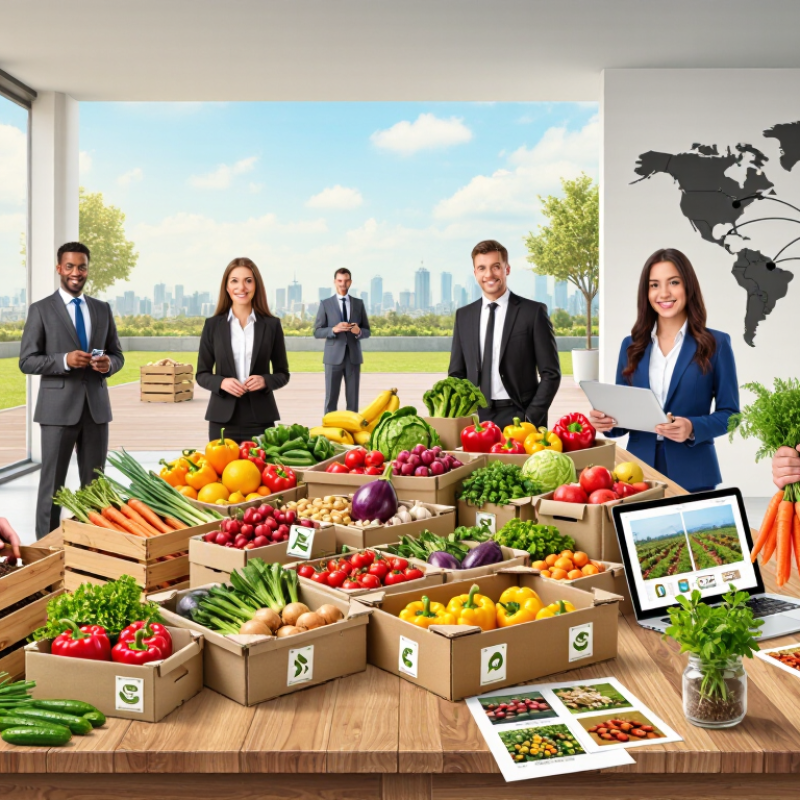
For global buyers, sustainable food choices mean more than selecting a “green” label. They involve environmental protection, fair working conditions, animal welfare, and long-term business resilience. The definition should cover the full life cycle: farm inputs, processing, transport, retail, use, and disposal. It also requires credible evidence, not attractive packaging. FAO estimated that agrifood systems produced 31% of global human-caused greenhouse gas emissions in 2019 (The State of Food and Agriculture 2022). The figure is large. Yet emissions are only one measure.
Buyers should compare products using consistent boundaries and functional units. Ask for origin, production methods, water risks, land-use impacts, labor safeguards, and waste data. A lifecycle assessment can show whether farming, refrigeration, or transport creates the greatest burden. UNEP reported 1.05 billion tonnes of food waste in 2022, representing 19% of food available to consumers (Food Waste Index Report 2024). Accurate forecasting, flexible specifications, and suitable pack sizes may reduce that loss. Smaller packaging is not automatically better. Its material footprint may increase.
Procurement experience shows that traceability helps only when records are current and independently checked. Prefer measurable targets, audit access, and corrective-action plans over vague promises. Certifications can assist, but they cannot replace local risk assessment. A low-carbon product may still involve water stress or poor labor conditions. No option is perfect. Buyers should record trade-offs, review supplier data annually, and keep uncertainty visible when evidence remains incomplete.
Choosing foods with lower greenhouse gas emissions can reduce the climate impact of purchasing decisions. The values show average emissions per 100 grams of protein, including land-use change, production, processing, transport, retail and packaging. Buyers can prioritize plant-based proteins such as beans and peas while reducing reliance on higher-impact foods such as beef and lamb.
Source: Poore and Nemecek, Science, 2018; data summarized by Our World in Data. Values are global averages and can vary by production system and location.
Global buyers are looking beyond price, flavor, and delivery speed. Environmental and social factors now shape responsible food purchasing. FAO reported that agrifood systems produced 16.5 billion tonnes of carbon dioxide equivalent in 2022. This equals about 32% of human-caused emissions. Buyers should request emissions data across farming, processing, transport, and storage. Farm-level evidence matters.
Waste deserves equal attention. The 2024 UNEP Food Waste Index estimated 1.05 billion tonnes of food waste in 2022. Households created about 60% of that waste. Buyers can reduce losses through accurate demand planning, flexible specifications, and smaller packaging when appropriate. A perfect-looking tomato is not automatically a sustainable choice. That assumption needs review.
Social safeguards must sit beside environmental metrics. Ask whether workers receive safe conditions, fair contracts, and accessible grievance channels. Check whether small producers receive clear payment terms and realistic delivery requirements. The International Labour Organization reported 27.6 million people in forced labour in 2021, showing why supply-chain due diligence cannot remain a paperwork exercise. Traceability should identify production regions, not merely final suppliers. Certifications can help, but they do not replace independent verification. Data remains uneven, especially among small farms. Buyers should disclose uncertainty instead of presenting estimates as facts. Sustainability is still imperfect. That is precisely why purchasing decisions need evidence, humility, and regular rechecking.
For global buyers, sustainable food labels are useful starting points, not automatic proof. Check who issued the certification, what standard it follows, and whether independent auditors verified it. A credible label should identify its certification scope, audit date, and supply-chain requirements. The certificate must cover the actual product, not only the processing facility.
Read the small print. “Responsible,” “natural,” and “eco-friendly” may describe marketing claims rather than measurable performance. Look for evidence about soil management, water use, labor conditions, animal welfare, and emissions. A certified organic product may reduce synthetic chemical use, but it does not automatically have a low carbon footprint. A fair labor claim may not guarantee strong biodiversity protection. No label is perfect.
Ask suppliers for traceability records, audit summaries, and corrective-action reports. Verify certificate numbers through the issuing body’s public database when available. Compare the label with import rules in your destination market. Standards can differ across regions, creating confusing gaps. In procurement reviews, I would also record unanswered questions instead of hiding them. That habit feels slower, but it reduces overconfidence. Price, packaging, transport distance, and seasonal availability still matter. Sustainable purchasing requires evidence, careful comparison, and occasional reconsideration.
Global buyers need more than a low price when comparing food suppliers. Ask for origin records, harvest dates, transport routes, and production methods. The FAO reported that agrifood systems produced 16.5 billion tonnes of CO₂-equivalent emissions in 2021, representing about 31% of global human-caused emissions. This makes supplier-level evidence important.
Tip 1: Compare verified data, not promises. Request audited greenhouse-gas figures, water-use measurements, and clear Scope 1, 2, and 3 boundaries. Check whether figures cover one product, one site, or the whole company. Those differences can change the result.
Tip 2: Examine traceability under pressure. Ask suppliers to trace a shipment from farm to warehouse. Review recall procedures, labor documentation, and independent certification records. The UNEP Food Waste Index Report 2024 estimated that 1.05 billion tonnes of food were wasted in 2022. Better forecasting, packaging, and cold-chain control can reduce avoidable losses.
Cost still matters. However, compare delivered cost, expected shelf life, rejection rates, and seasonal reliability together. A cheaper shipment may create more waste or emergency transport. I have found that simple scorecards expose these trade-offs quickly. They are not perfect.
Tip 3: Use weighted scoring, then challenge your assumptions. Give sustainability, quality, resilience, and price separate scores. Recheck the weighting with procurement, quality, and local logistics teams. A supplier with excellent reports may still lack capacity during a difficult harvest. Ask for recent evidence, not polished examples.
Global food buyers are moving beyond simple “green” claims. In 2026, procurement teams will examine emissions, water use, soil health, and labor evidence together. The FAO reported that agrifood systems produced 16.5 billion tonnes of carbon dioxide equivalent in 2021. That figure makes supplier-level measurement essential, not optional.
Traceability will become a practical buying requirement. Buyers may request farm coordinates, harvest dates, processing records, and transport distances. The 2024 UNEP Food Waste Index estimated 1.05 billion tonnes of food waste in 2022. Smaller pack sizes, accurate forecasting, and flexible specifications can reduce avoidable losses. Simple changes matter.
Regenerative agriculture will attract attention, but definitions remain inconsistent. Buyers should ask for measurable indicators, such as soil organic carbon, fertilizer reduction, biodiversity checks, and verified water data. The 2023 FAO report on agrifood systems shows that environmental pressure varies widely across regions and commodities. One global checklist cannot fit every farm. This is still a weakness.
Demand for lower-impact proteins and seasonal products will also grow. However, buyers should compare nutrition, affordability, land use, and processing needs instead of trusting fashionable labels. Independent audits and credible life-cycle assessments can improve decisions, although these assessments still contain assumptions. Sustainable purchasing requires evidence, patience, and occasional disagreement with convenient claims.
It covers farming, processing, transport, retail, use, and disposal. Environmental protection matters. So do worker safety, animal welfare, and business resilience.
Ask for emissions, water risks, land-use impacts, and waste data. Include farming, refrigeration, storage, and transport. Farm-level evidence is especially useful.
Use consistent boundaries and functional units. Compare equal quantities and similar uses. Otherwise, attractive numbers may hide important differences.
No. Smaller packs may suit one household but use more material overall. Review package weight, product loss, and consumer demand together.
Ask about safe workplaces, fair contracts, grievance channels, and payment terms. Check whether delivery requirements are realistic for small producers.
No. Check the issuer, standard, audit date, scope, and actual product coverage. A label can help, but it cannot replace independent verification.
Read the small print. Request measurable evidence for soil, water, labor, animal welfare, and emissions. “Natural” alone proves very little.
Traceability should identify production regions and current records. Ask for audit summaries and corrective-action reports. A final supplier name is not enough.
Record unanswered questions and disclose uncertainty. Review supplier information annually. The decision may remain imperfect. That is acceptable, if trade-offs are visible.
Sustainable food choices for global buyers involve more than selecting products with environmental claims. They require a balanced assessment of how food is produced, processed, packaged, transported, and sourced. Key considerations include resource efficiency, carbon emissions, water use, biodiversity protection, fair labor practices, animal welfare, supply chain transparency, and support for local communities. This guide, “Tips For Sustainable Food Choices,” explains how buyers can compare products according to measurable impacts rather than relying solely on attractive marketing language.
It also presents practical methods for evaluating sustainability labels and certifications, including checking their standards, verification processes, and traceability requirements. When comparing global suppliers, buyers should review sourcing policies, production data, packaging materials, delivery practices, and long-term improvement plans. Looking ahead to 2026, sustainable purchasing is expected to place greater emphasis on transparent digital records, regenerative agriculture, lower-impact packaging, responsible logistics, and cooperation across the supply chain. These approaches can help organizations make informed purchasing decisions that support environmental resilience and positive social outcomes.

JETZ Foods